Personal project · 2026 · App Development
Scene Arranger for the MC-707
An experimentation lab for the aspiring live performer: music, lights, dance and lyrics, planned together for maximum emotional connection.
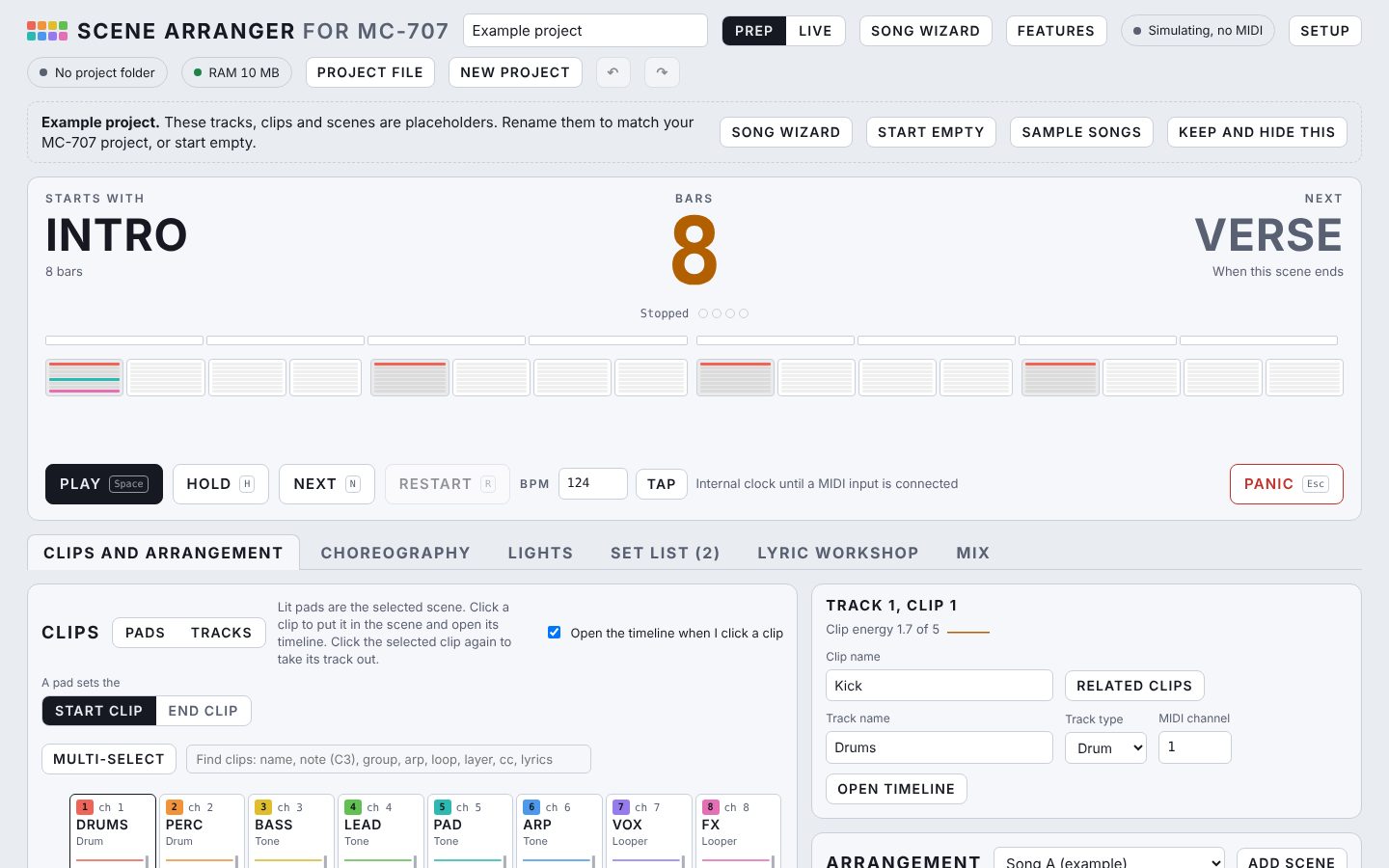
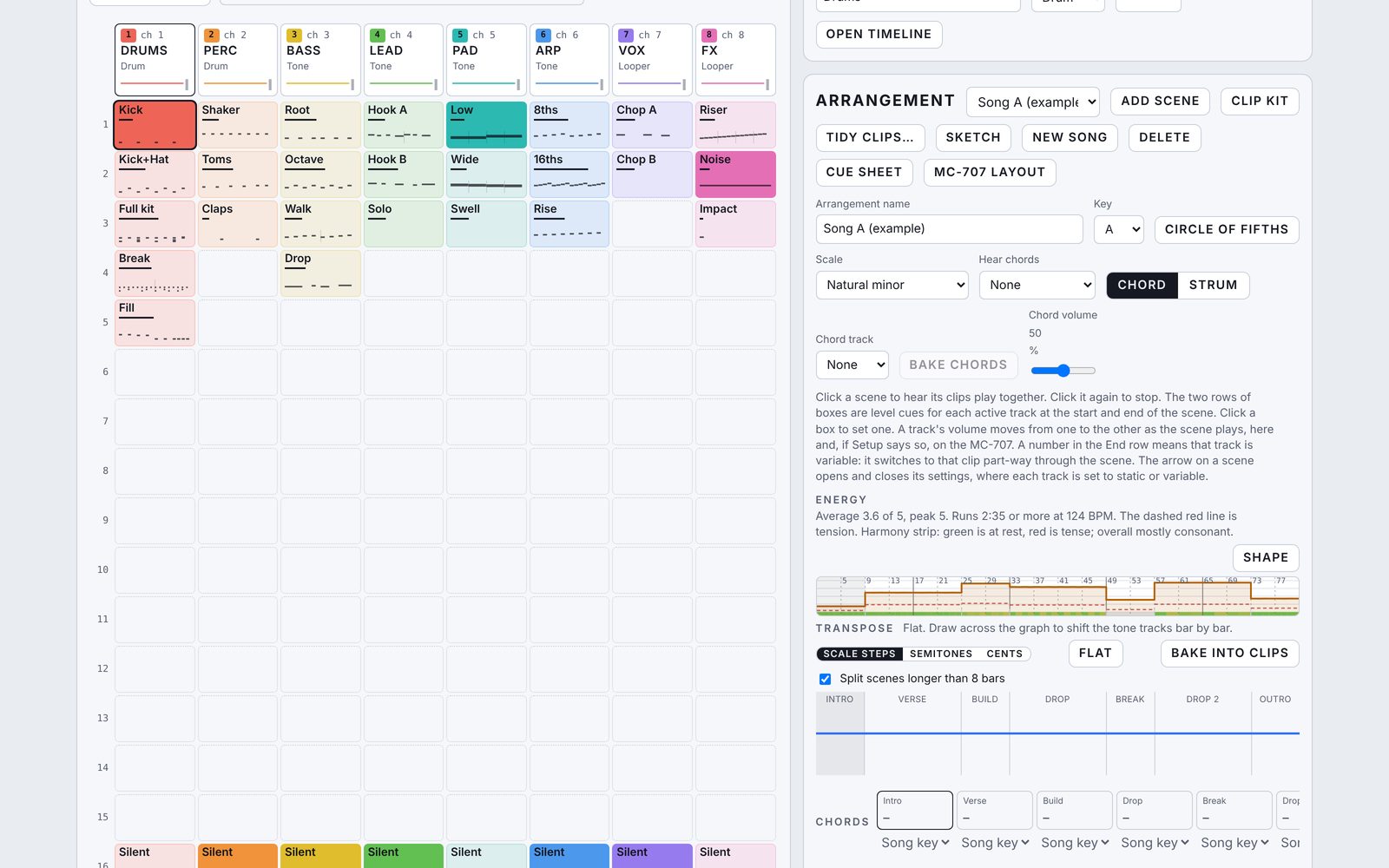
I wanted one place that gives an aspiring performer every tool they need to become proficient on stage with a Roland MC-707. The Scene Arranger is part arranger, part experimentation lab. It mirrors the hardware, plans songs bar by bar, switches scenes over MIDI, and produces a cue sheet so each song can be rebuilt to play on the 707 alone.
The Problem Statement
Learning to perform live is about much more than knowing the instrument. A performance is music, lighting design, dance moves and lyrics working together, and the audience feels it when they don’t. The 707 is great for performing, but building a whole set on its small screen, one clip and one scene at a time, is slow and makes it hard to see the shape of a song, let alone the show around it. My goal was to give an aspiring performer all the tools to become proficient on stage, in one place: author the set on a computer, experiment freely, test it against the hardware, and end up with everything needed to play with no laptop on stage.
The tool considers every part of the performance together, for maximum emotional connection. Each song has energy and tension curves, and the lighting cues, choreography and lyrics are planned against the same bars as the music, so a build in the music can land with a change in the lights and a move on stage.
A Lab for Happy Accidents
The main approach is procedural. Rather than placing every note by hand, the musician sets up rules and lets the tool generate material: patterns, variations, chances that a note plays or not. The point isn’t to automate the music, it’s to hand the musician “happy sonic accidents” they wouldn’t have found on their own, and let them keep the ones they like.
Many of the music creation features draw on my years with 3D animation tools. Musical values are drawn as curves on lanes, the way you would shape an animation curve. Lanes can have their own lengths and loop against each other, like layered animation cycles. And the tools are grouped by job (setup, generate, shape, time), the way a 3D package separates modelling from animation.
Mirror the Device, Including Its Limits
A tool for hardware should respect the hardware. On the 707 a clip is at most 128 steps, you can’t set how many times a clip loops, and an automated clip switch only lands at the end of the playing clip. The arranger models all of this, so a plan that works on screen also works on the device. Where the 707 can’t import something (controller automation from MIDI files), the cue sheet lists the moves by bar and beat so I can record them by hand.
Design Iteration
Organize complexity, don’t append it
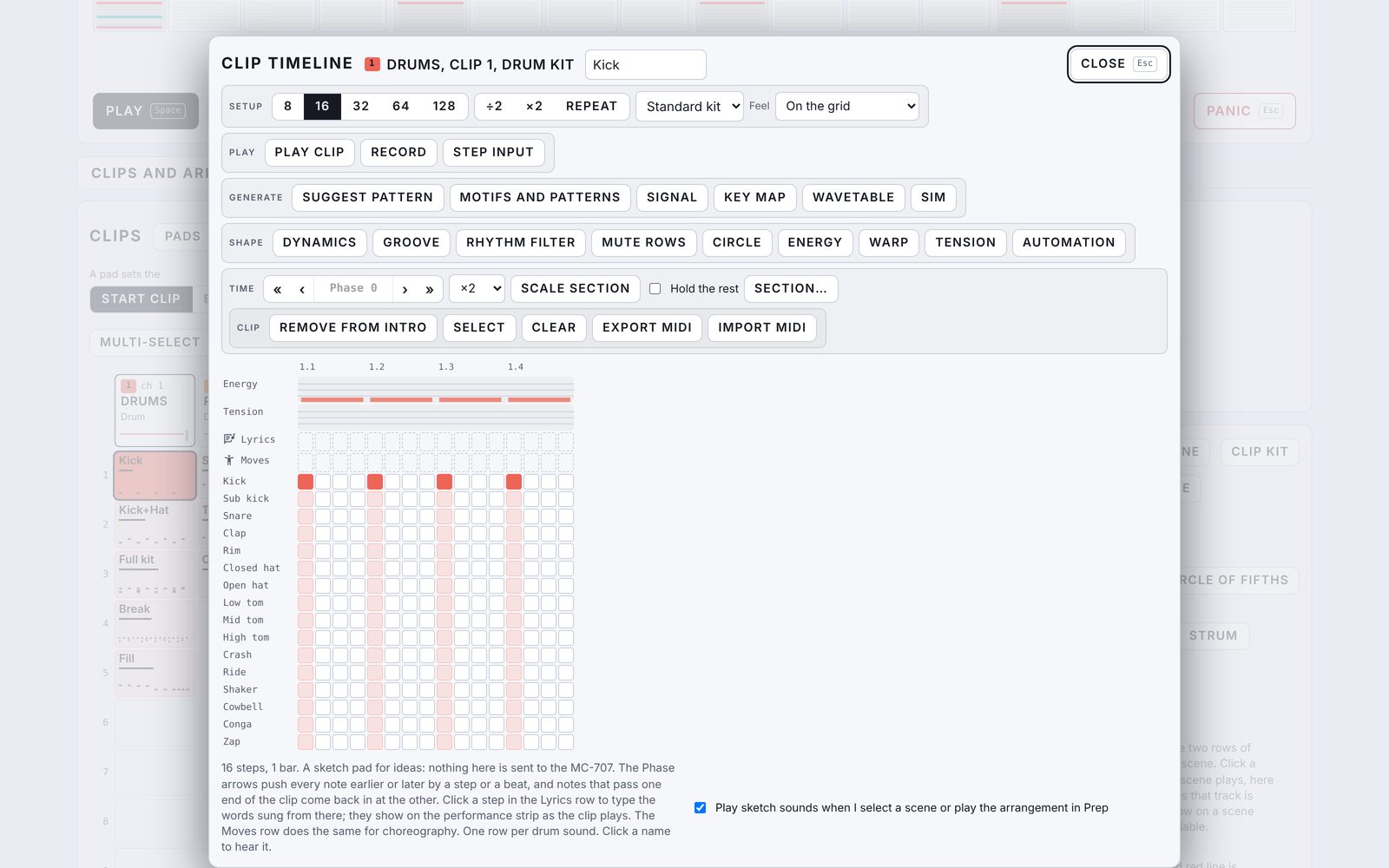
As features grew, the clip editor’s toolbar got crowded. I had it regrouped into labelled sets that hide when they don’t apply, and moved the clip information into its own card.
Visual, direct editing
Drag-to-draw lanes for pitch, velocity, chance and gate, each with its own length for polyrhythms; a modal keyboard for arpeggios; long press context menus.
The whole show in one place
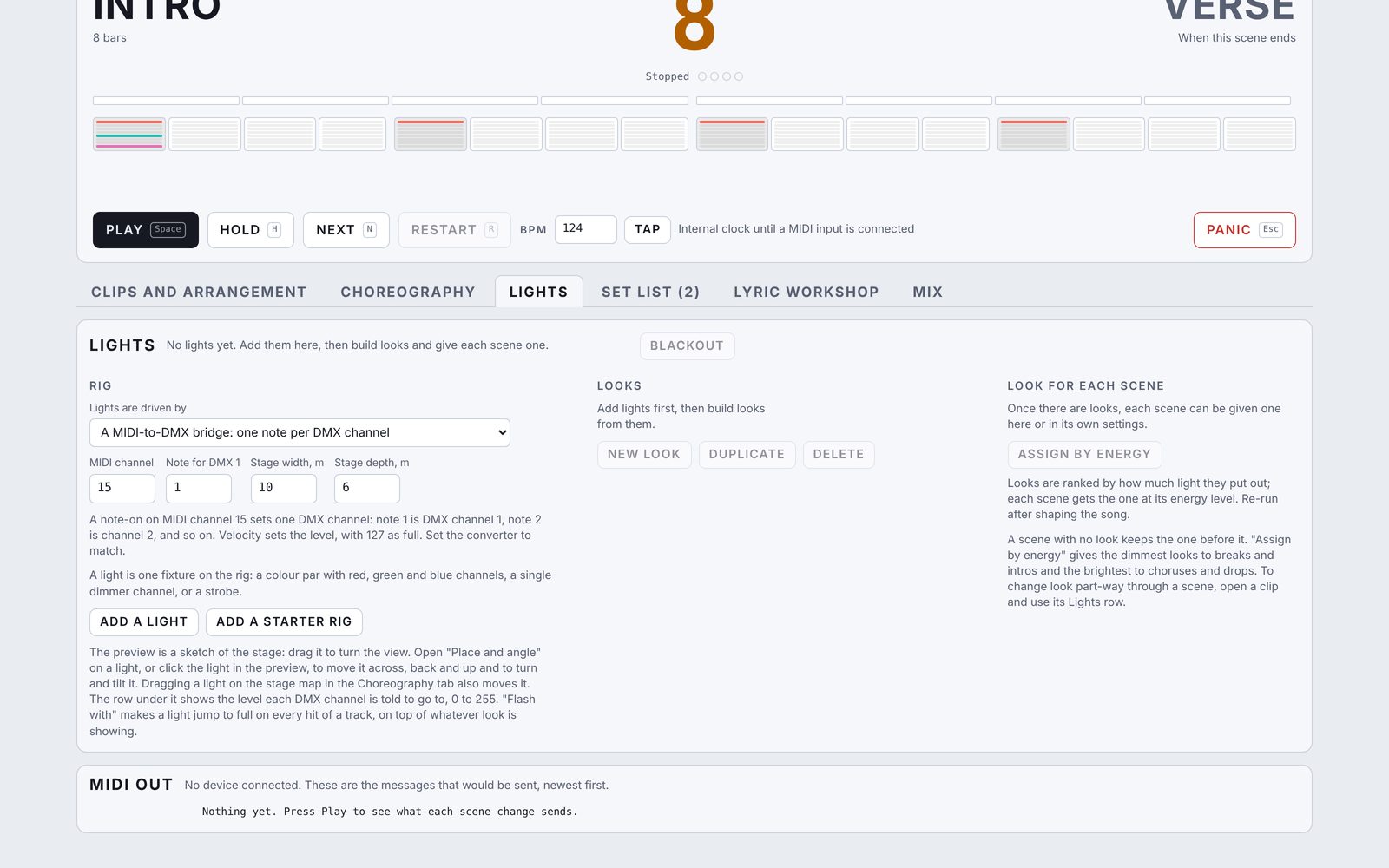
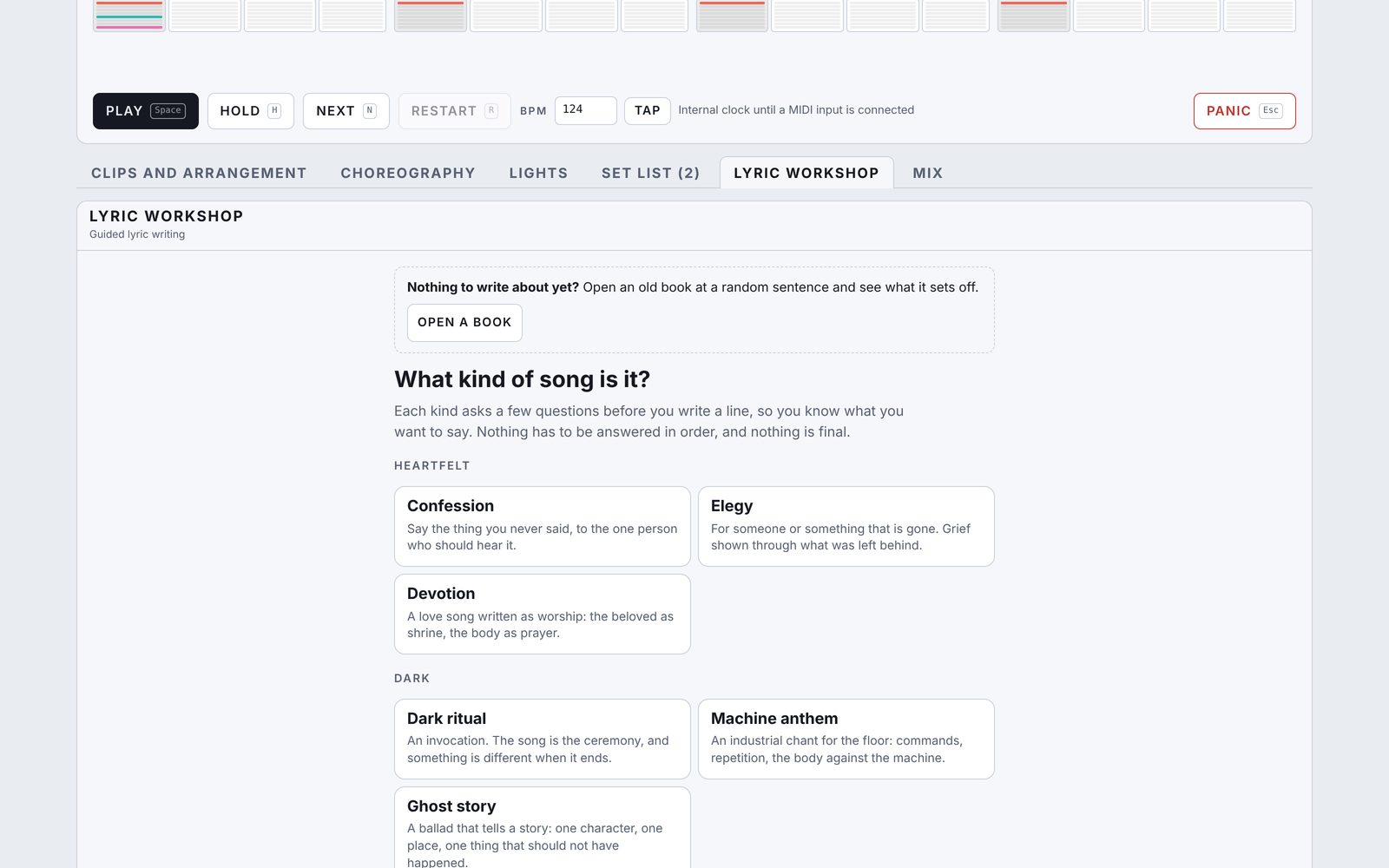
Choreography, lighting cues (sent to a DMX controller as MIDI notes), a lyric workshop and set lists live alongside the music, on the same timeline, so every part of the show is designed for the same emotional arc.
Testing on the Hardware
I tested every build with my own 707 and reported issues as precisely as I could (“why doesn’t the pattern start at 1.1?”), asking for the root cause to be found before any patch. An automated browser test suite runs after each change to catch regressions. The same page also runs inside Ableton Live as a VST3 or AU plugin that bridges MIDI to the host.
Conclusion
I use the arranger to plan my own sets, and scene switching on the 707 works reliably from it. The next step is to package the clip editor as a standalone iOS Audio Unit. My takeaway: designing around the limits of the device, rather than pretending they aren’t there, is what made the tool trustworthy.