Personal project · 2026 · App Development
Fluxions: calculus you can touch
An interactive calculus course that starts the way Newton did: by measuring motion.
I wanted to re-learn calculus myself, and I wanted it to feel like play rather than a textbook exam. Fluxions is a visual course where every idea starts as something you can drag, measure and see. I was its first student.
Introduction
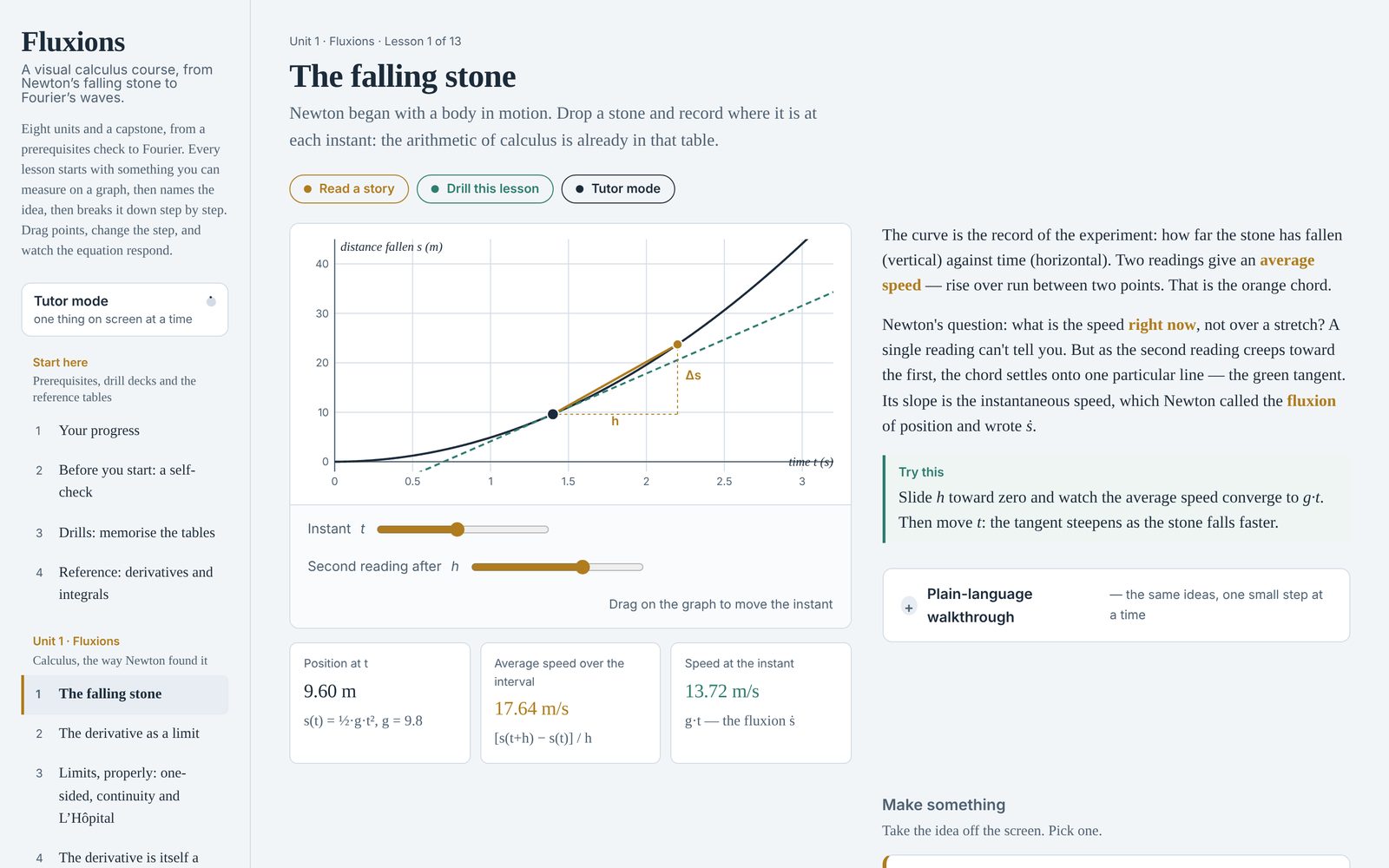
Newton’s calculus grew out of motion, so the course starts there: drop a stone, take two readings, and watch the average speed settle onto the tangent as the gap shrinks. Every lesson follows the same rhythm: something you can measure on a graph, then the name for it, then a plain language walkthrough one step at a time.
Try It: The Falling Stone
This is the first lesson of the course, running live on this page. Move the instant t, shrink the second reading h toward zero, or drag on the graph, and watch the average speed settle onto the speed at the instant.
This interactive lesson needs JavaScript.
Recall, Not Just Understanding
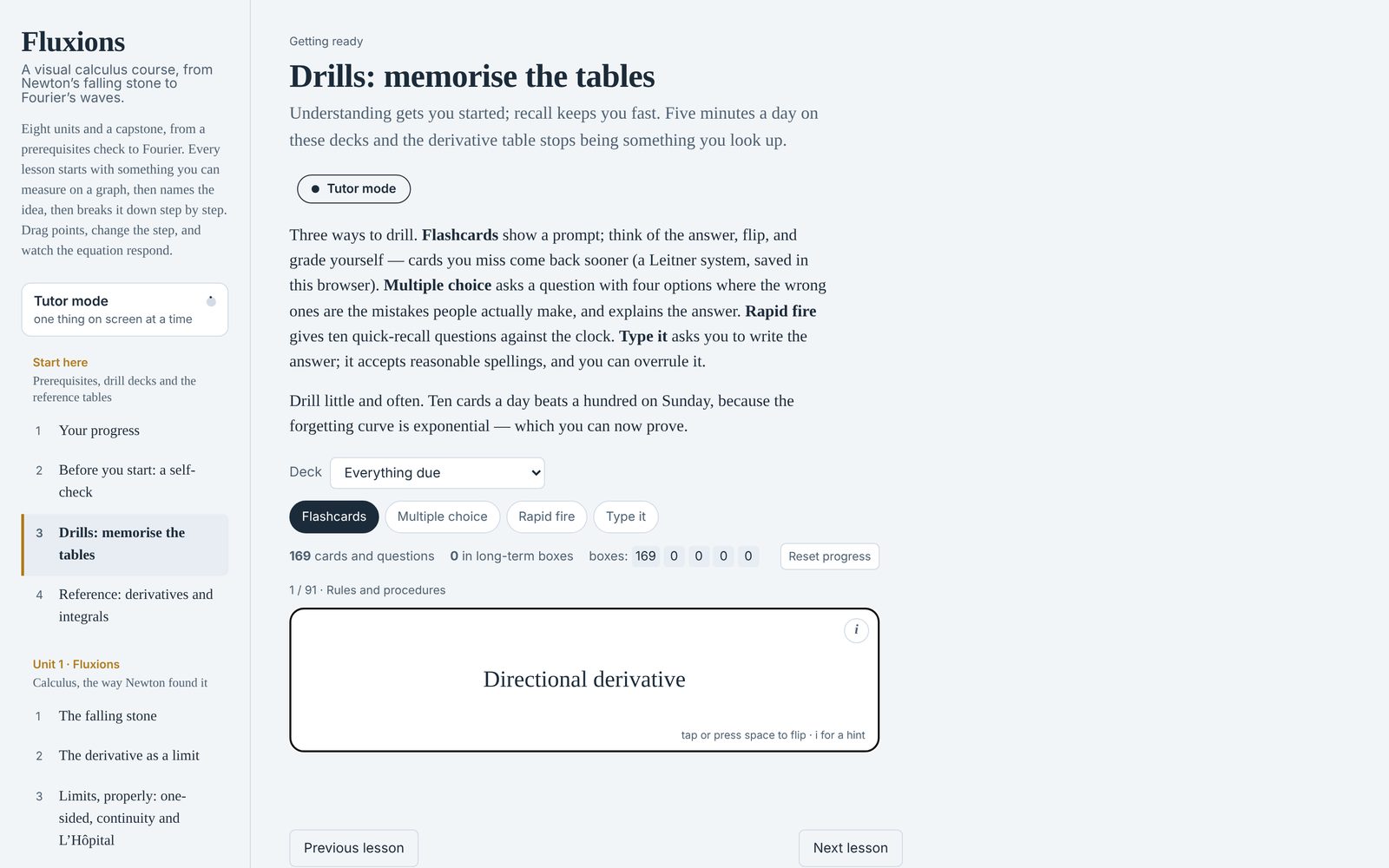
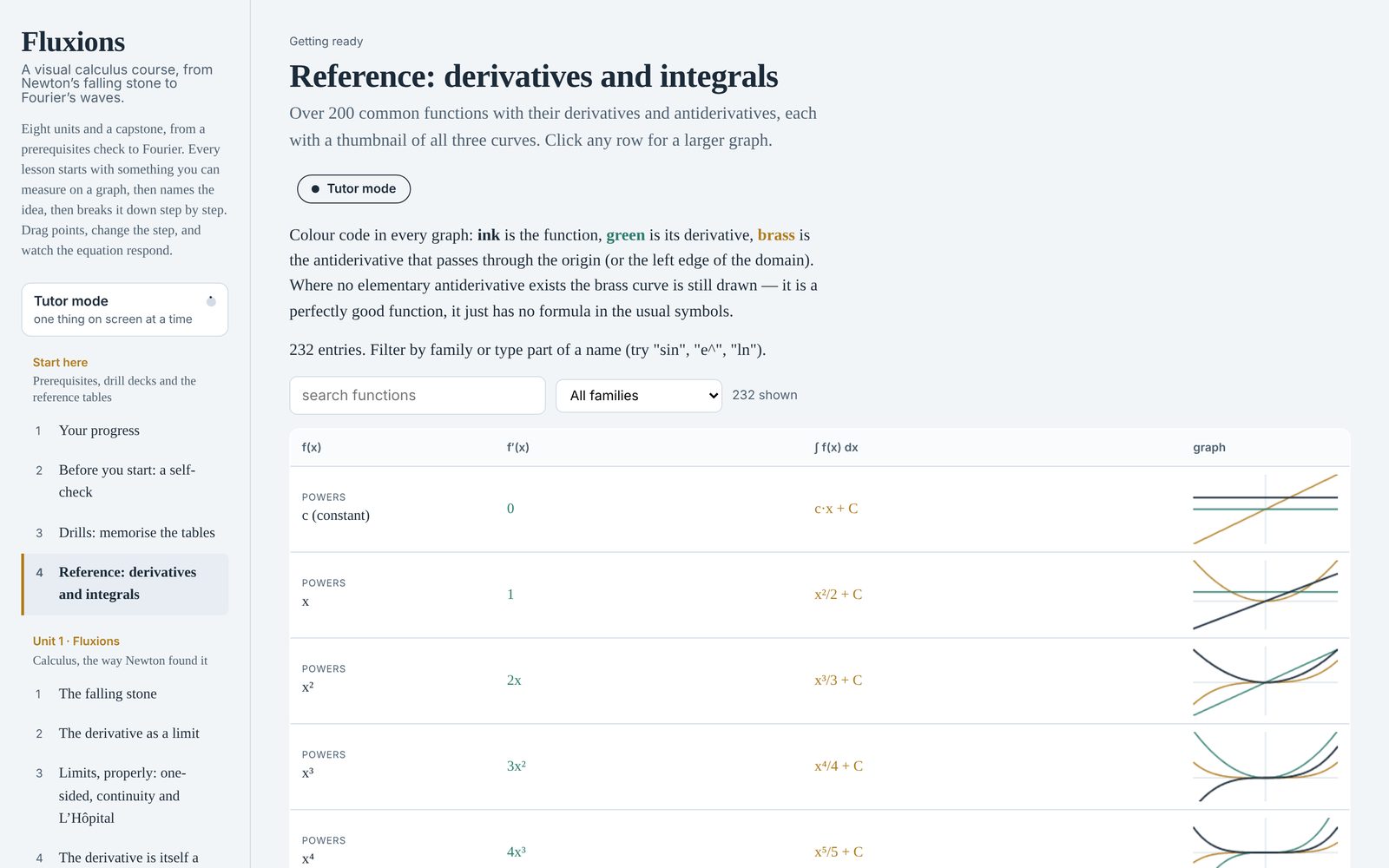
Understanding gets you started, but recall keeps you fast. The drills come in four modes: flashcards on a spaced repetition schedule, multiple choice built from the mistakes people actually make, rapid fire, and type the answer. A reference of over 200 functions shows each one beside its derivative and integral as small graphs.
Take It Off the Screen
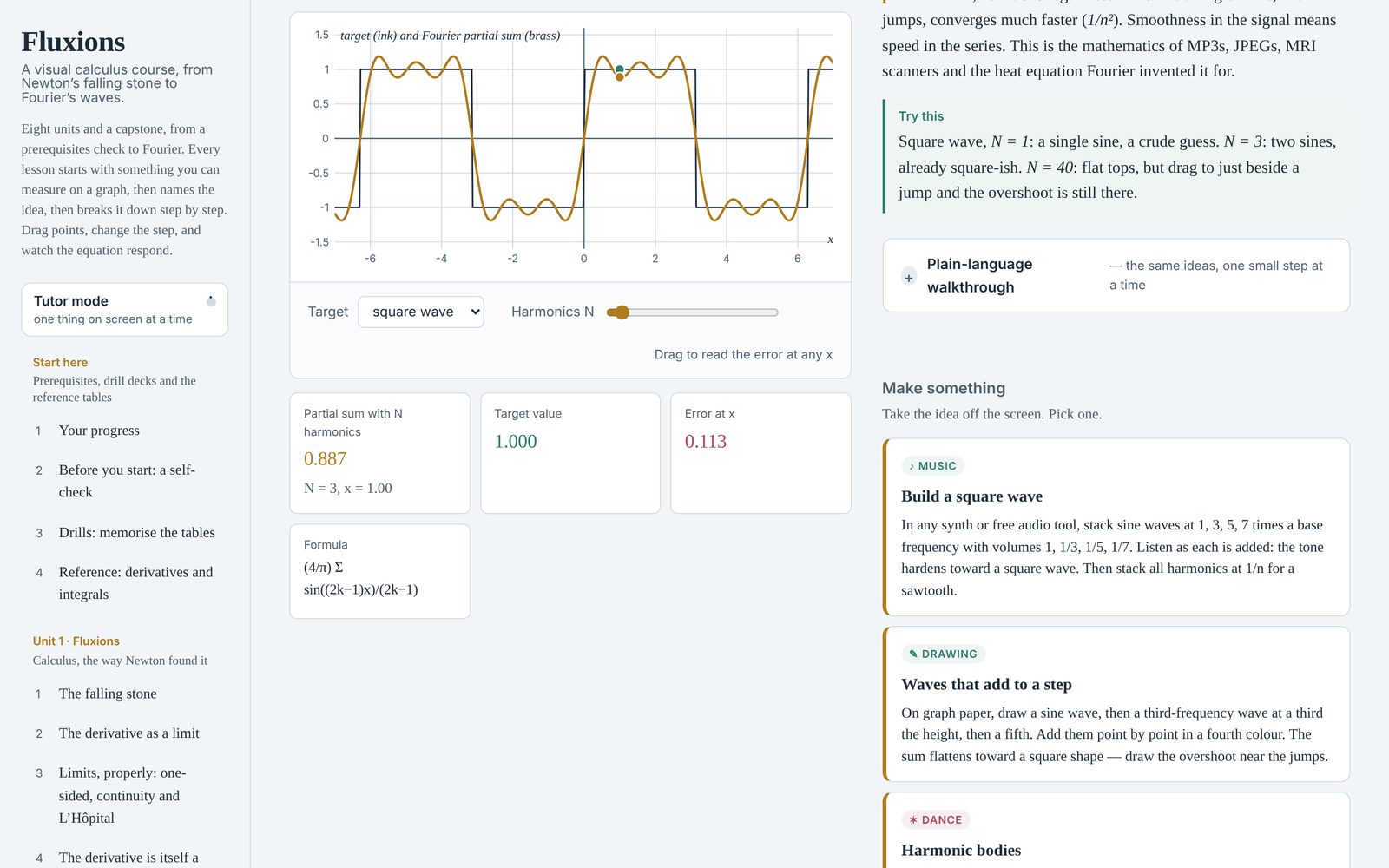
Every lesson ends with “Make something”: three projects in music, dance, drawing, photography or writing, plus the same idea in other disciplines. Instead of a mock exam, the course ends with a capstone that pairs an art form with a field such as astronomy or economics, scored with a rubric.
Conclusion
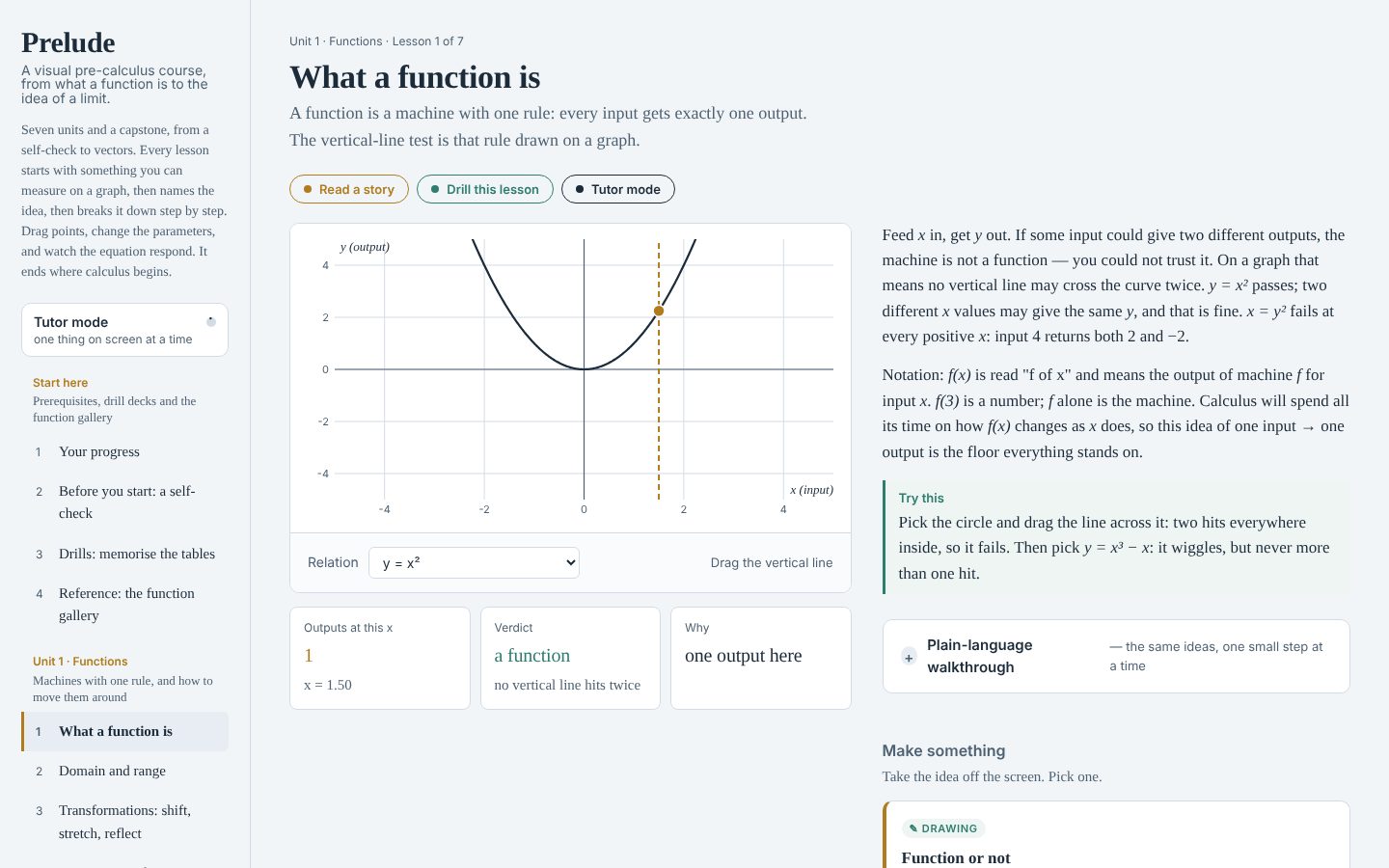
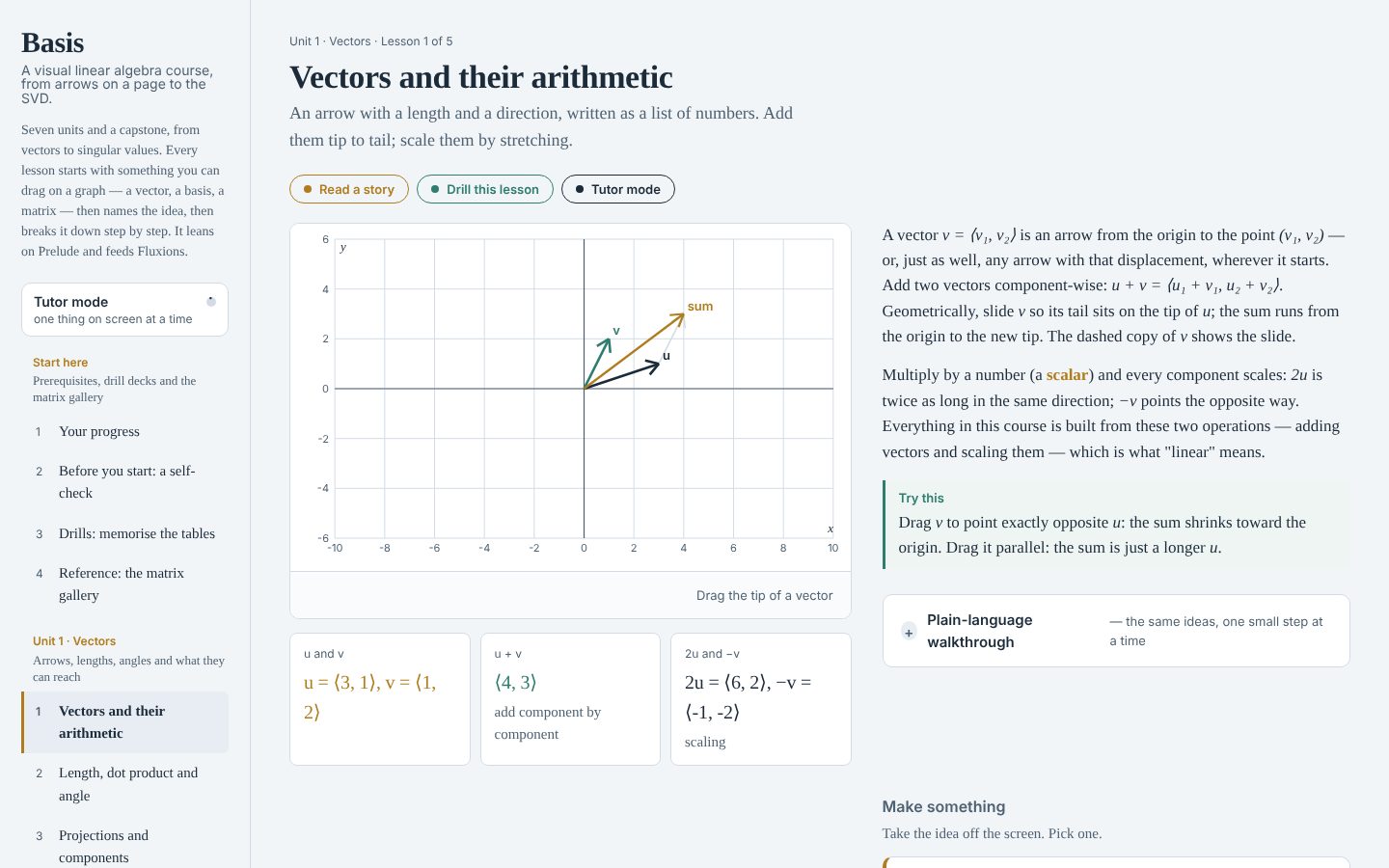
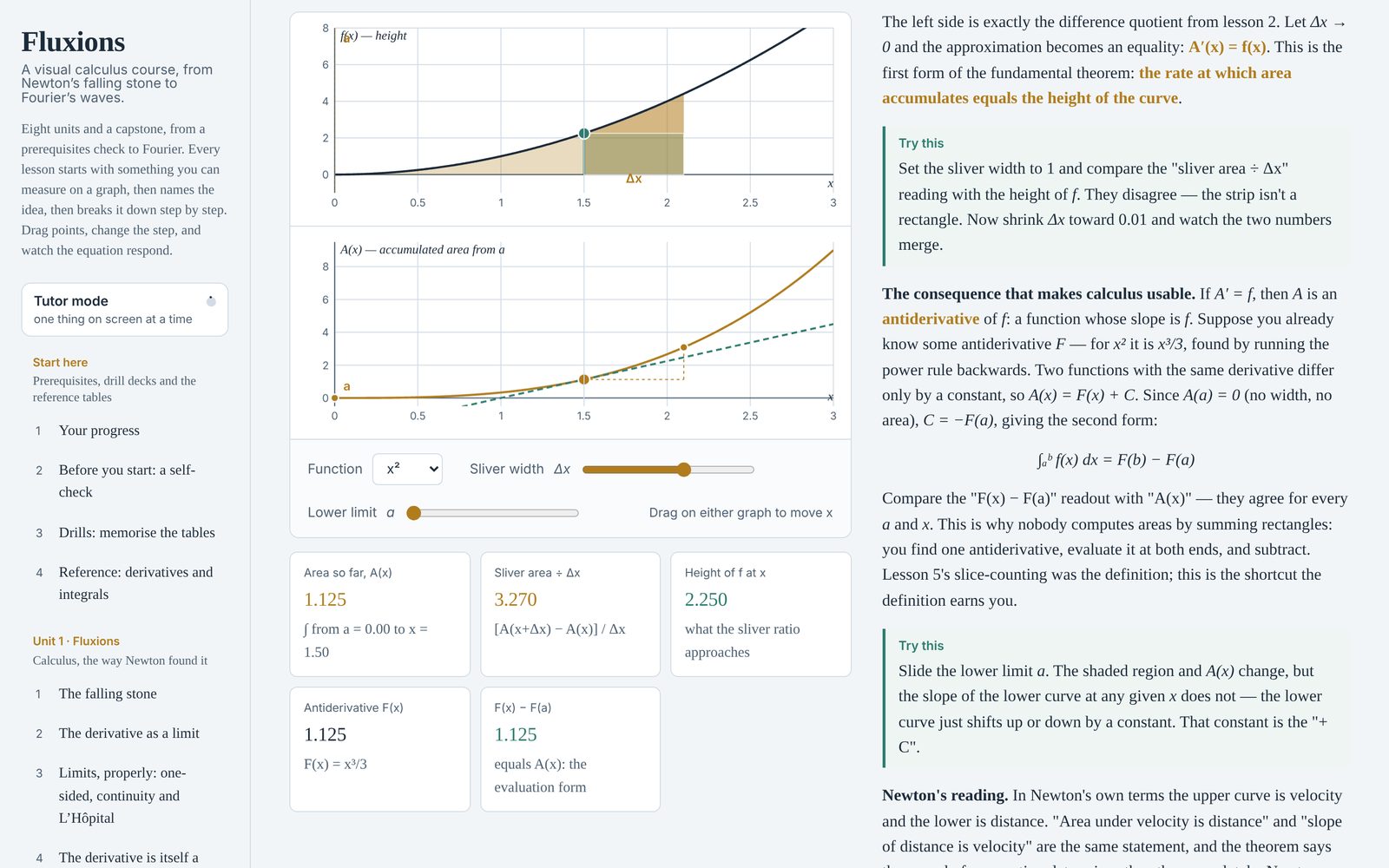
Twice I asked for a blunt assessment of how prepared a high school student would be after the course. The answers drove new lessons (formal limits, related rates, integration by parts, volumes) and doubled the practice sets. The course now has eight units and a capstone, 43 lessons, 407 graded practice problems and 169 drill cards, and the same engine runs a pre-calculus and a linear algebra course.