Cubeler · 2024–25 · Research
Networking Research: Benchmarks, Requirements and Flows
The board behind Cubeler's networking module: how other platforms match businesses, what members would need, and the questions that had to be answered first.
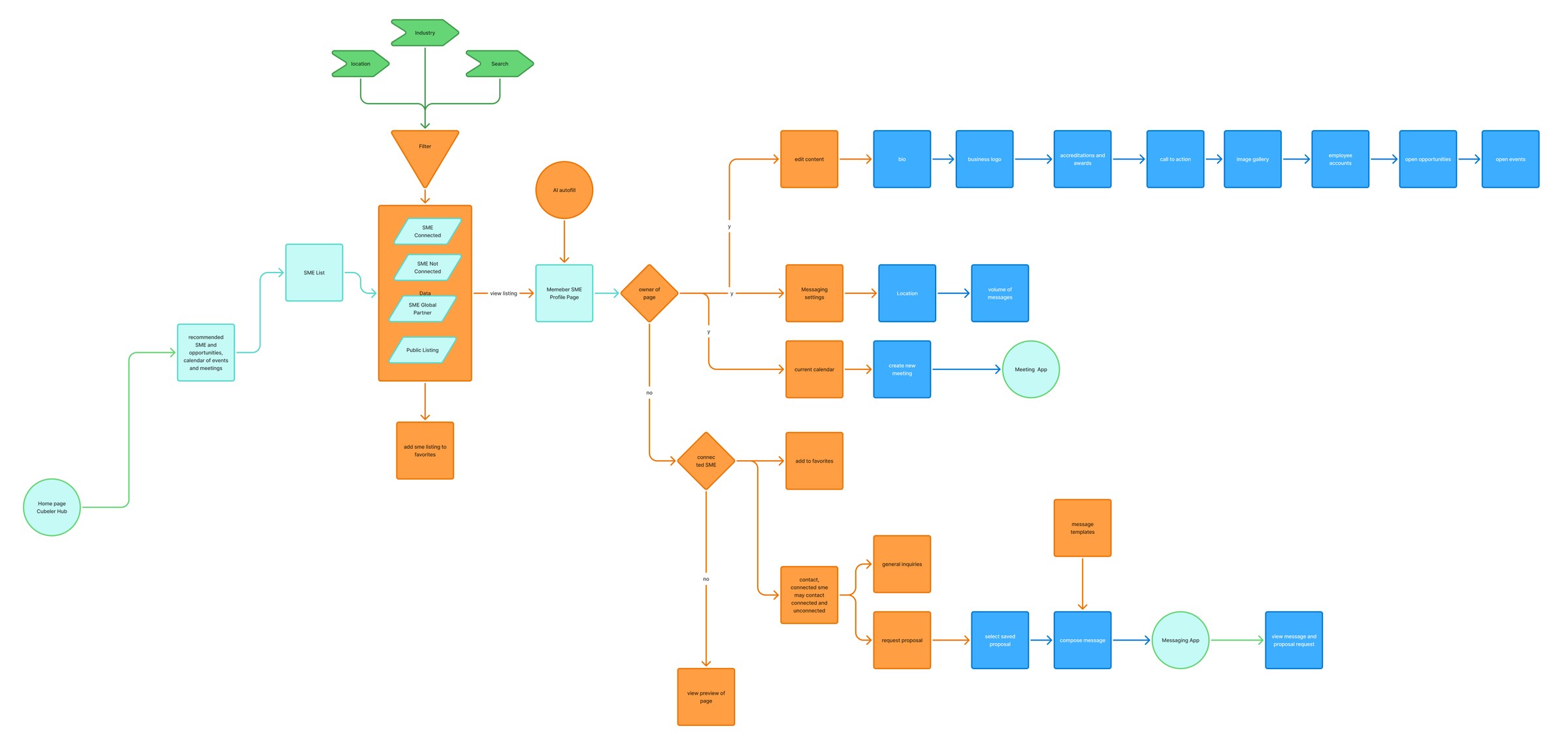
When I started on the networking module at Cubeler there were many ideas and no agreed direction. Before designing any screens for B2B Networking and AI Matching, I put everything on one board. It showed how other platforms match businesses, every requirement I had heard, the questions that had not been answered, and the path a member would take. These are my working notes from that board.
Benchmarks
I started with platforms built for business matchmaking, mostly around events. These were Gevme, b2match, and Catalonia Open Challenges, a marketplace that ACCIÓ (Catalonia's agency for business competitiveness) runs on b2match.
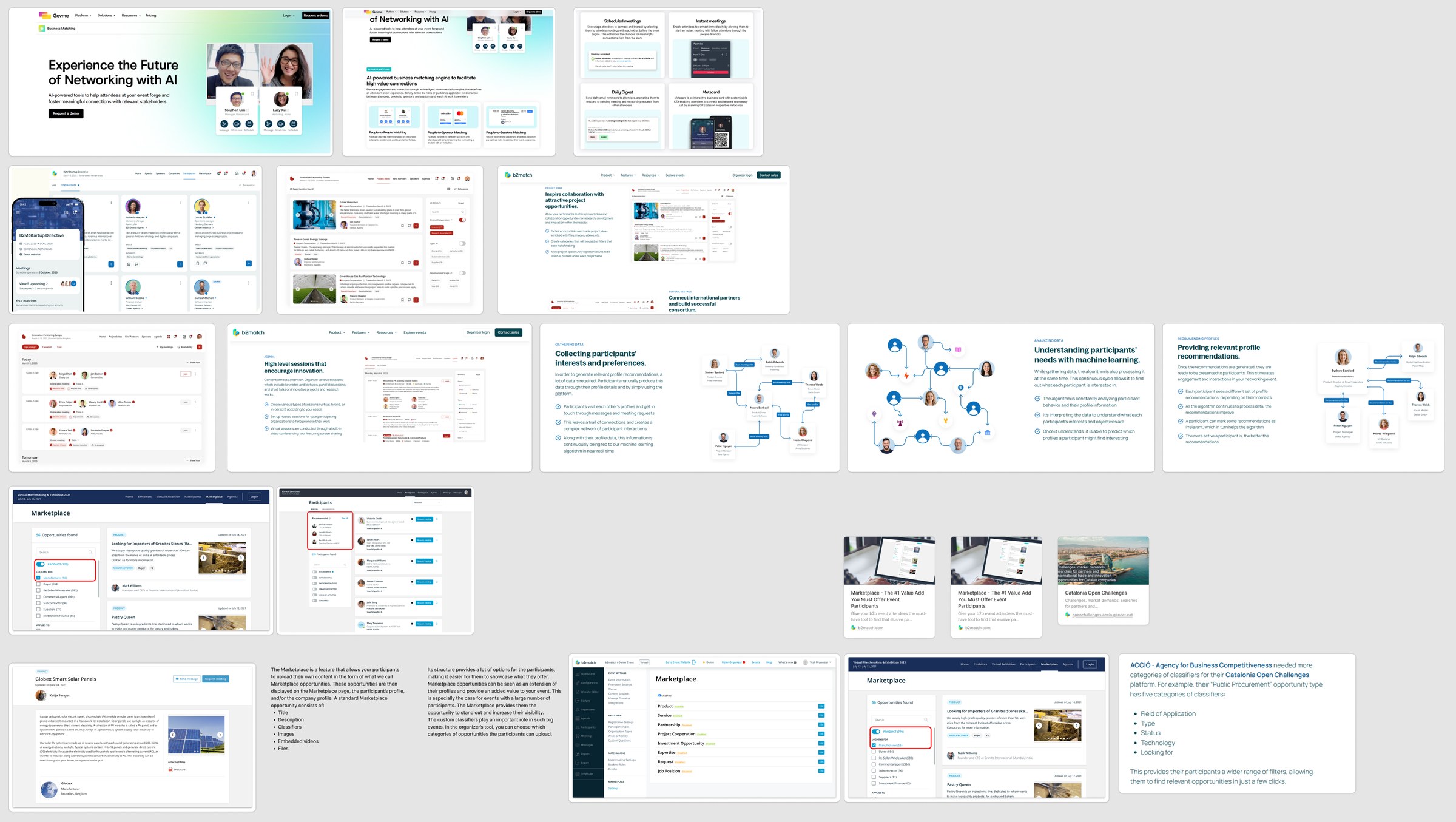
I noted 3 things:
- Matching runs on profile data and behaviour. These platforms gather what participants say about themselves and what they do, then recommend a different set of profiles to each person.
- A marketplace extends the profile. Participants post opportunities with a title, description, classifiers, images and files, and those show on the marketplace and on the company profile.
- Opportunities have types, and classifiers make them findable. Product, service, partnership, project cooperation, investment, expertise and request are all different things. A shared set of classifiers lets people filter down to what matters in a few clicks.
Requirements
Next I wrote down every requirement as a sticky note and sorted them by area. This let the team see the whole scope at once and discuss a specific note instead of a general idea.
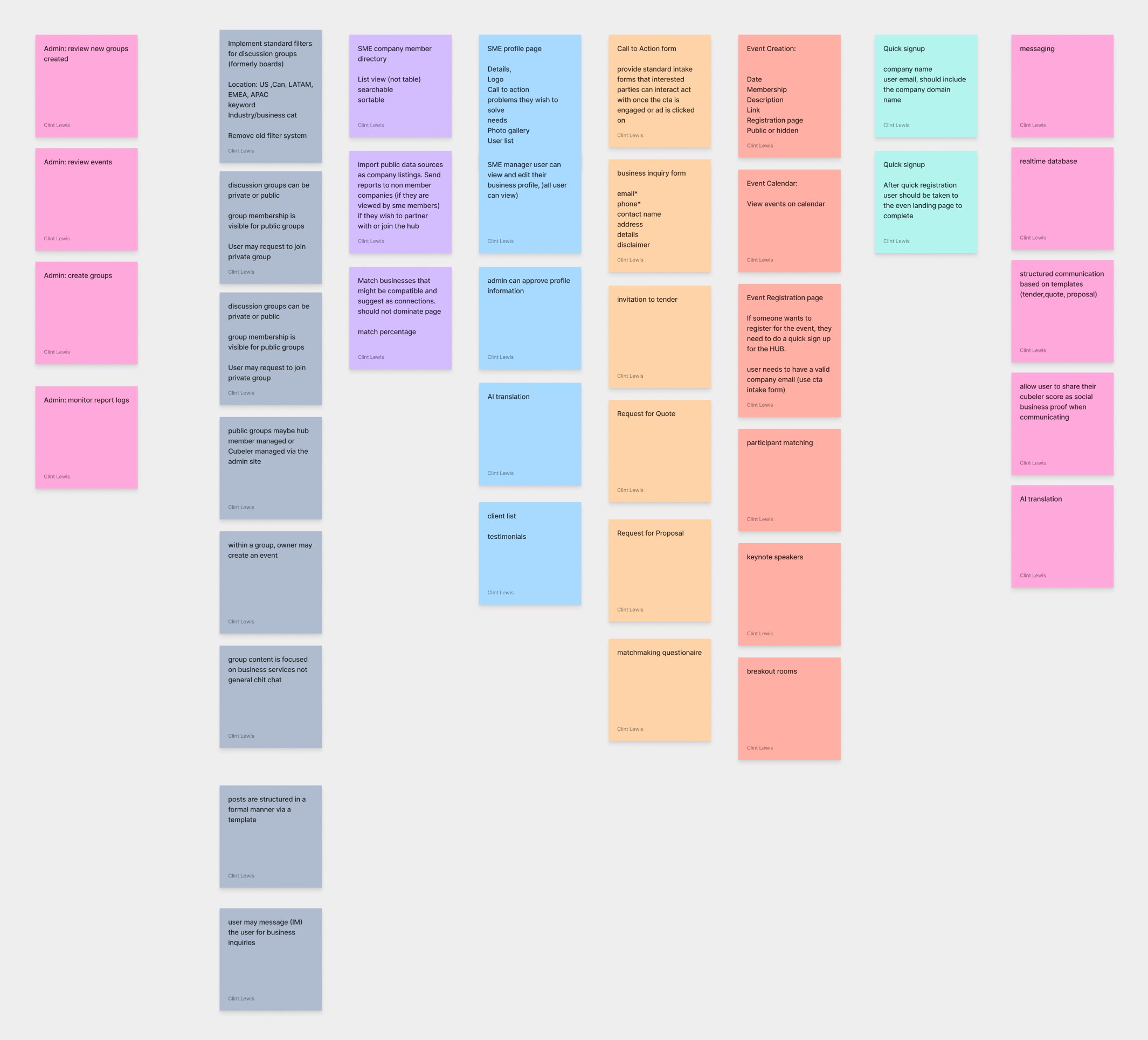
Company directory
A searchable, sortable list of member companies, shown as a list and not a table. Suggest compatible businesses with a match percentage, but matching should not dominate the page.
Business profile
Details, logo, a call to action, the problems the business wants solved and its needs, a photo gallery, client list and testimonials. The business's manager edits it, everyone can view it, and an admin can approve the information.
Structured requests
Standard intake forms behind every call to action: a business inquiry, an invitation to tender, a request for quote and a request for proposal.
Messaging
Members message each other for business inquiries, with communication structured by templates, AI translation, and the option to share a Cubeler score as proof when they reach out.
The wall also covered:
- Discussion groups (public or private, focused on business and not general chat, with posts that follow a template)
- Events with a calendar, and a quick signup that asks for a company email
- The admin tasks behind all of it, namely reviewing groups and events, and monitoring reports
Open Questions
Some notes were questions and not requirements. I kept them in their own section so they would not get lost.
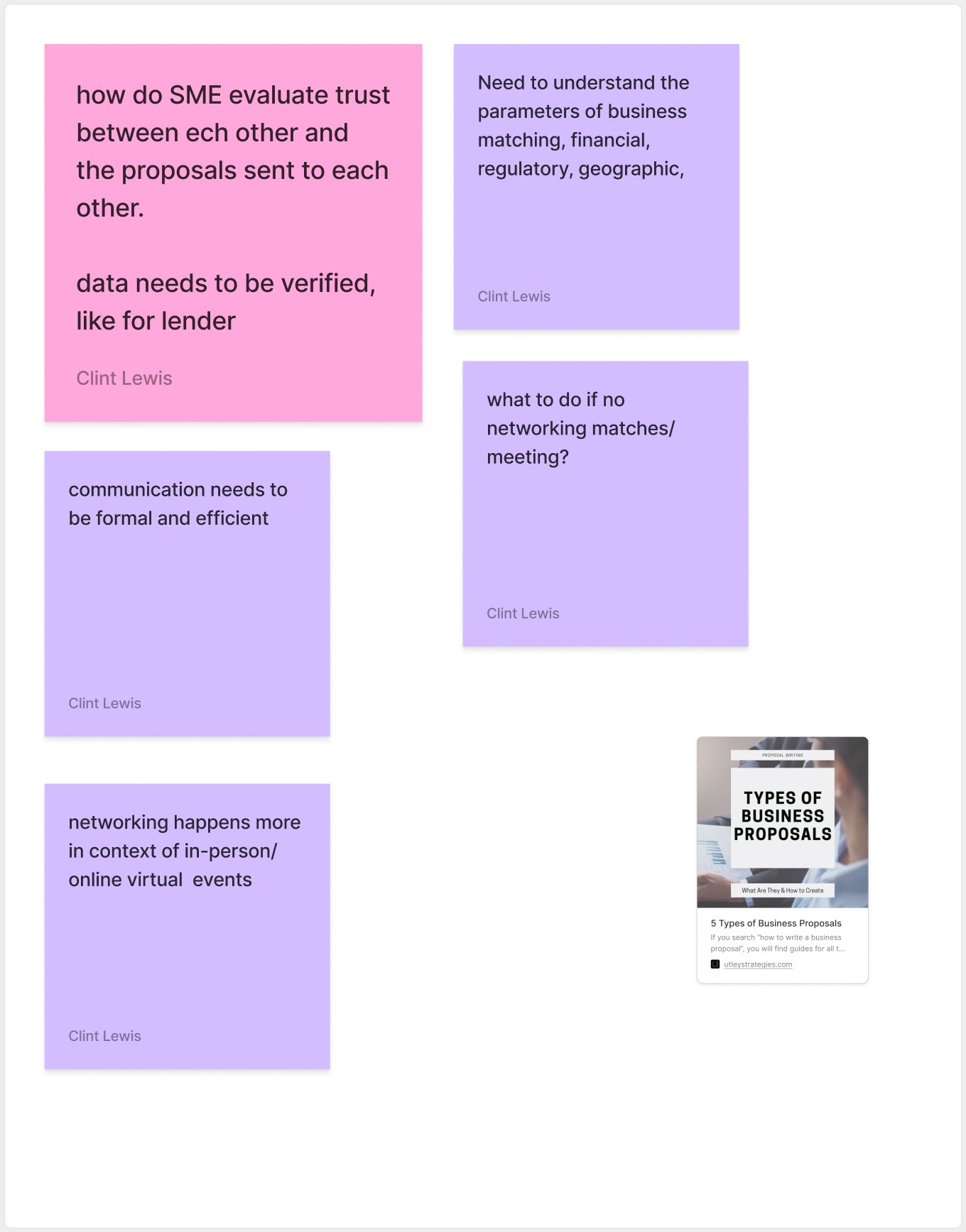
- How do small businesses evaluate trust between each other, and in the proposals they send each other? Data needs to be verified, like it is for a lender.
- What are the parameters of business matching? Financial, regulatory, geographic?
- What do we do when there are no matches or meetings?
- Communication needs to be formal and efficient.
- Networking happens more in the context of in-person and online events.
Formal Business Requests
The note about formal communication led me to research how businesses formally approach each other. A request for information (RFI), a request for quote (RFQ), a request for proposal (RFP) and an invitation to tender each mean something different, and each expects a different answer.
In addition I went back to the business requirements document and noted the goals and problems it implied about business communication. I then wrote a list of questions to take to stakeholders about goals, users, matching criteria, trust and privacy.
To test what a matchmaking questionnaire would have to ask, I drafted one for a single case, a construction company that needs heavy machinery. It covers the company, its current equipment, future needs, buying or leasing, budget and financing, who decides, and preferred features and brands.
Member Flow
I then drew the path a member takes. From the hub's home page the member sees recommended businesses, opportunities and upcoming events and meetings. The company list can be filtered by location, industry and search, and it holds 4 kinds of listing:
- Connected members
- Members who are not connected
- Global Partners
- Public listings
Opening a listing leads to the business profile, which AI can auto-fill. What happens next depends on who is viewing the page:
- The owner of the page can edit its content, set messaging preferences and manage a calendar.
- A connected member can add the business to favourites or contact it, with a general inquiry or a proposal request written from a saved proposal and a message template.
- Everyone else sees a preview.
Messaging
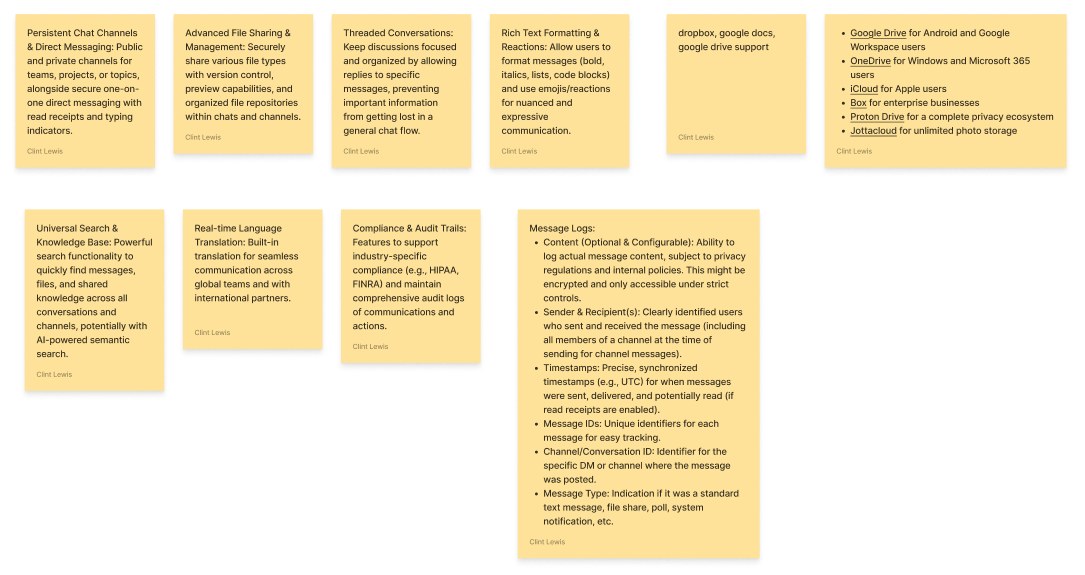
Messaging has its own section on the board, as it is where a match turns into work. The requirements were:
- Channels and direct messages
- Threaded conversations
- File sharing, with support for the cloud drives businesses already use
- Search
- Real-time translation
- Audit trails with message logs for compliance
Outcome
The board carried directly into the design that the investors approved:
- Optional matching. The note that matching should not dominate the page became an optional AI match in the directory, with a match percentage on each card.
- Verification status. The question about trust became a verification status shown beside each business.
- Typed opportunities. Request for quote, request for proposal, collaboration and sales listing each have their own form, which keeps communication formal and efficient.
- A shared vocabulary. The classifiers I saw in the benchmarks led to using a standard classification for products and services.
- Auto-filled profiles. AI auto-fill from the flow became part of the business profile, with the member reviewing the result.
- On-platform conversation. Chat, attachments and built-in translation are part of the Opportunity Tracker.
Not everything on the wall was included. Discussion groups were dropped, since leadership saw little value in them. Events are planned for a later release. This let the design focus on the directory, profiles, opportunities and the tracker.
See the result in the B2B Networking and AI Matching case study.