Cubeler · 2024 · Research
Advertiser Research: Personas and Customer Journeys
The research behind Cubeler Advertising: who would advertise to small businesses, what they need, and why the first version went direct instead of programmatic.
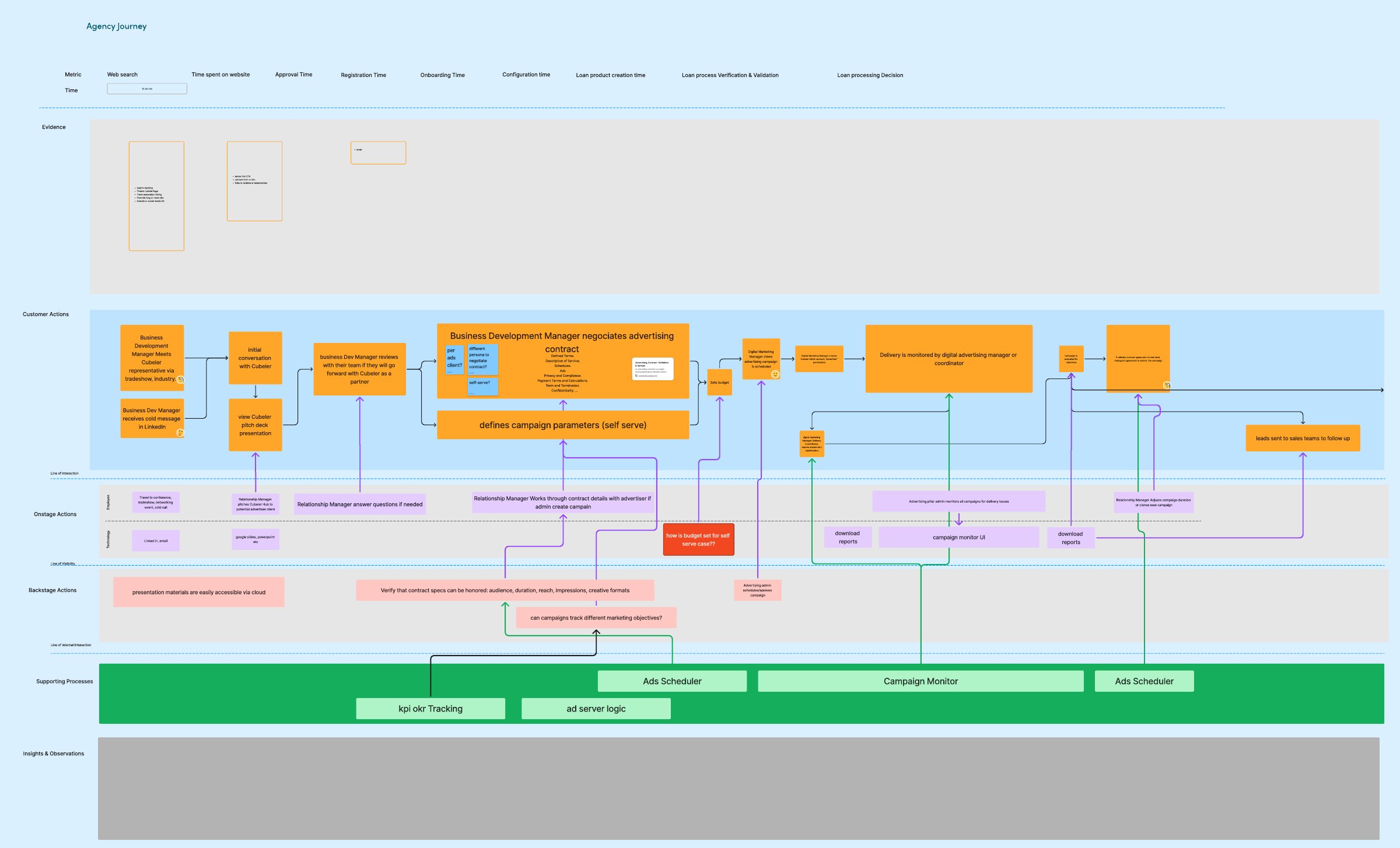
This is the research I did before designing Cubeler Advertising. The question was who would advertise on a business hub for small and medium enterprises (SMEs), and what would make it worth their time. I had previous experience in ad tech, so I knew how the industry buys and sells ad space. I used that to map the market, define who the advertisers were, and follow their journey from first contact to a finished campaign. This was desk research based on industry sources, job descriptions and postings, competitor platforms, and a wide scan of B2B marketing agencies.
Ad Ecosystem
As a first step I laid out how digital advertising works, so the whole team shared one picture. The board showed the media formats a brand can spend on, and the chain from advertiser to agency to publisher, with demand-side platforms, supply-side platforms, ad exchanges and ad networks in between.
I wrote plain definitions for the terms we would need, such as what counts as an impression, viewability and click-through rate. In addition I added a glossary of programmatic terms to the board.
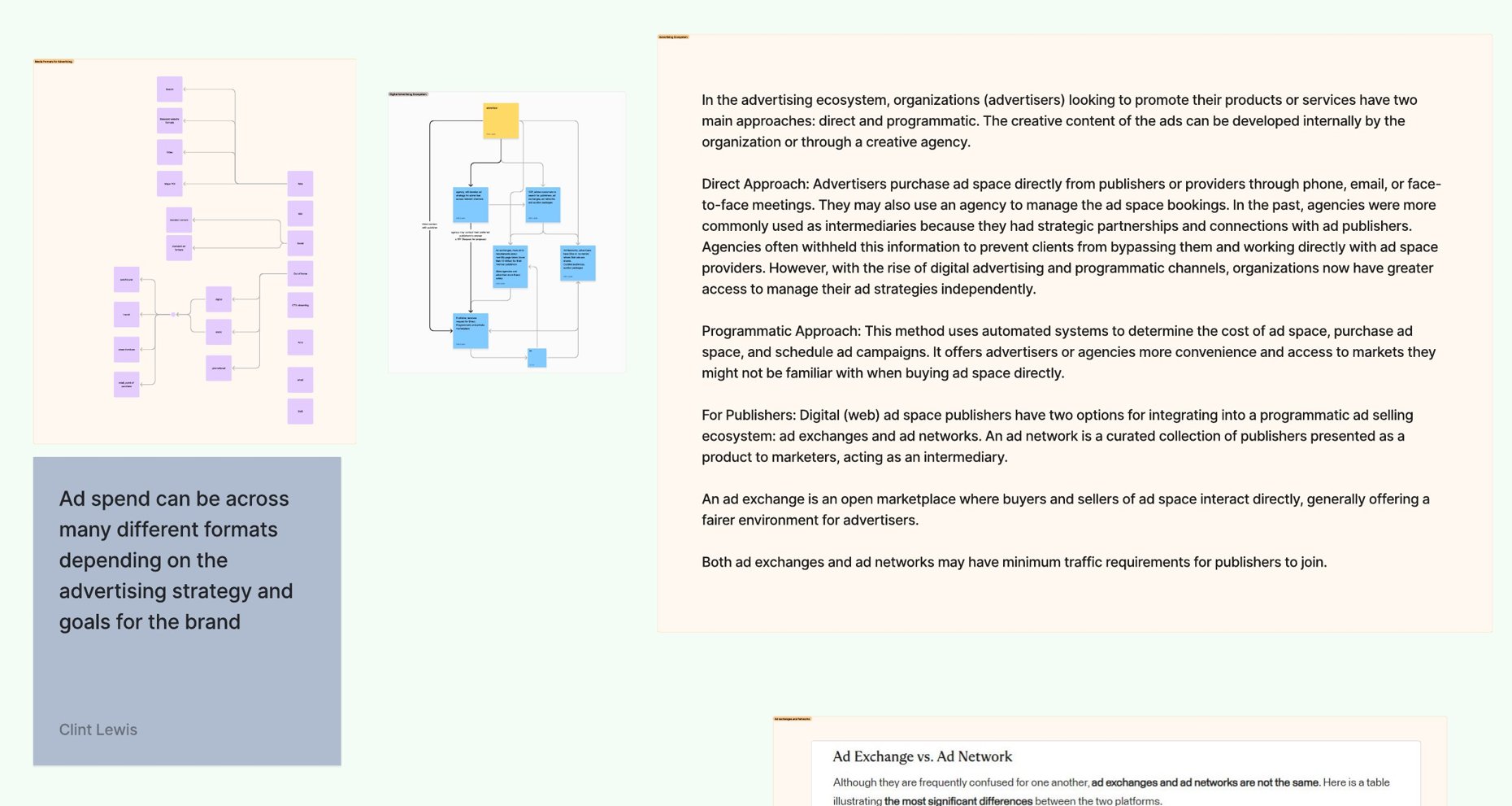
Ad exchanges and networks have minimum traffic requirements for publishers, often in the millions of page views per month. Unfortunately a new platform such as the Business Hub would not meet these requirements.
Hypothesis
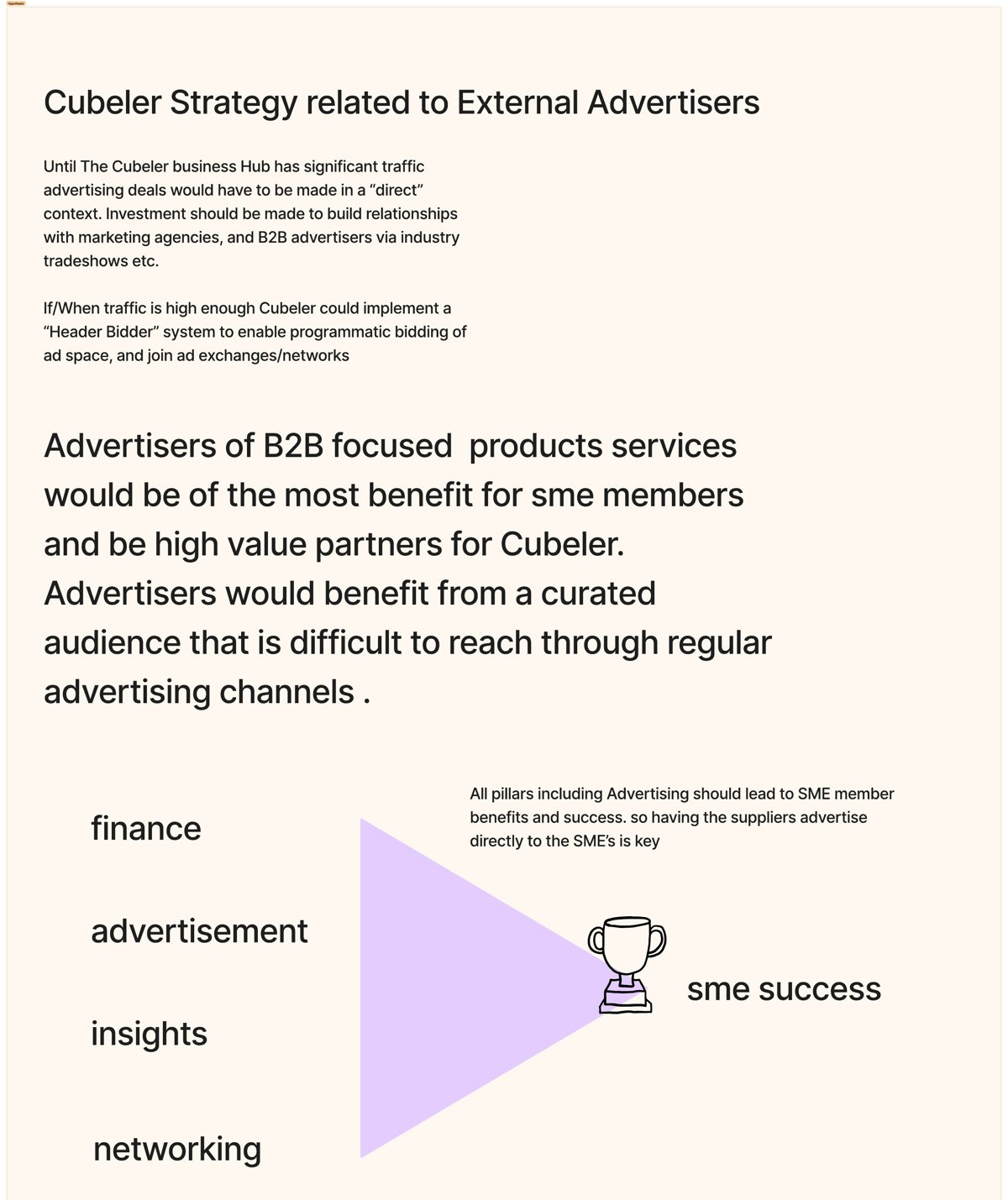
My hypothesis was that until the Business Hub has significant traffic, advertising deals have to be made directly. This means building relationships with marketing agencies and B2B advertisers at industry tradeshows and events. If and when traffic is high enough, Cubeler could add header bidding and join exchanges and networks.
The second part of the hypothesis was about which advertisers to pursue. Advertisers of B2B products and services benefit SME members the most. In return they get a curated audience of business decision-makers, which they cannot easily buy elsewhere.
Every pillar of the hub, advertising included, should lead to SME success. Thus having suppliers advertise directly to SMEs fits that goal.
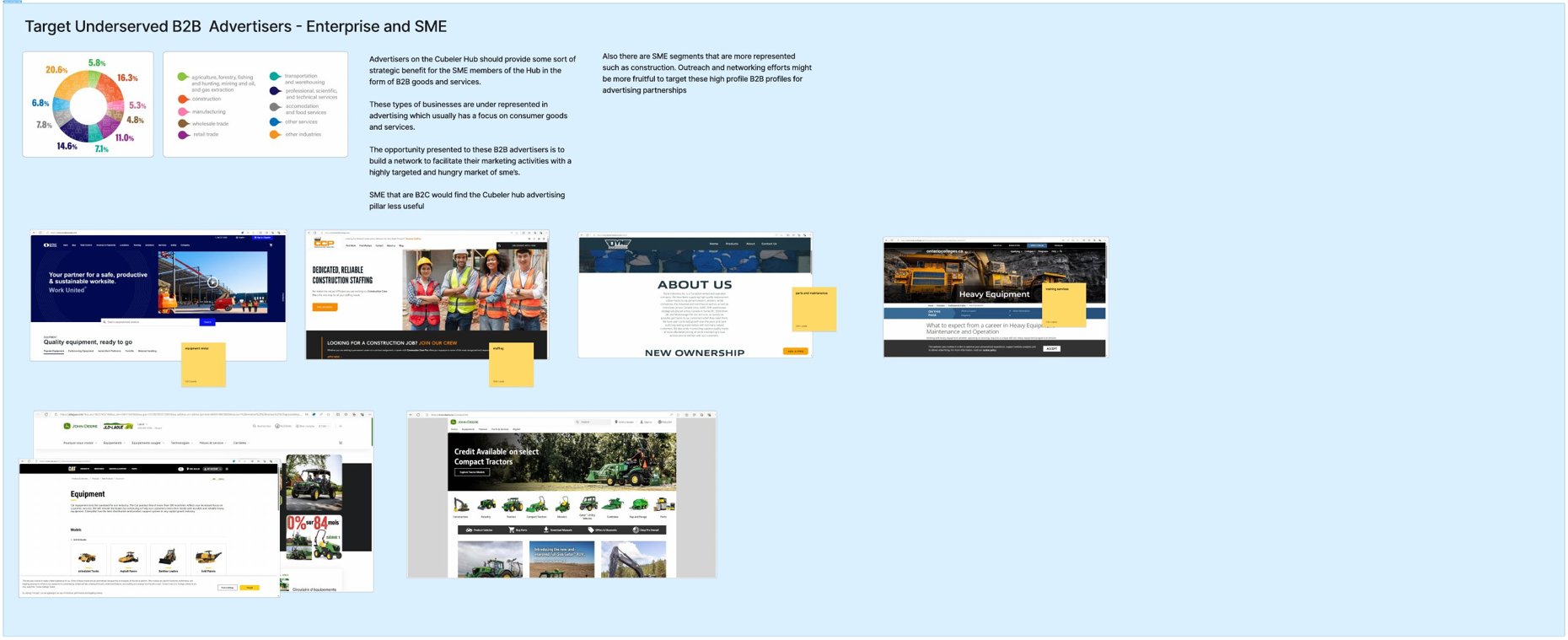
The member data supported this. B2B businesses are under-represented in advertising, which mostly focuses on consumer goods, and sectors such as construction are well represented among members. This made equipment makers, rental companies, staffing firms and parts suppliers natural first targets.
I worked through John Deere as a hypothetical case. It sells to construction, agriculture, forestry and landscaping businesses. Like CAT and Komatsu it also finances equipment, so one partner could be both an advertiser and a lender.
Benchmarks
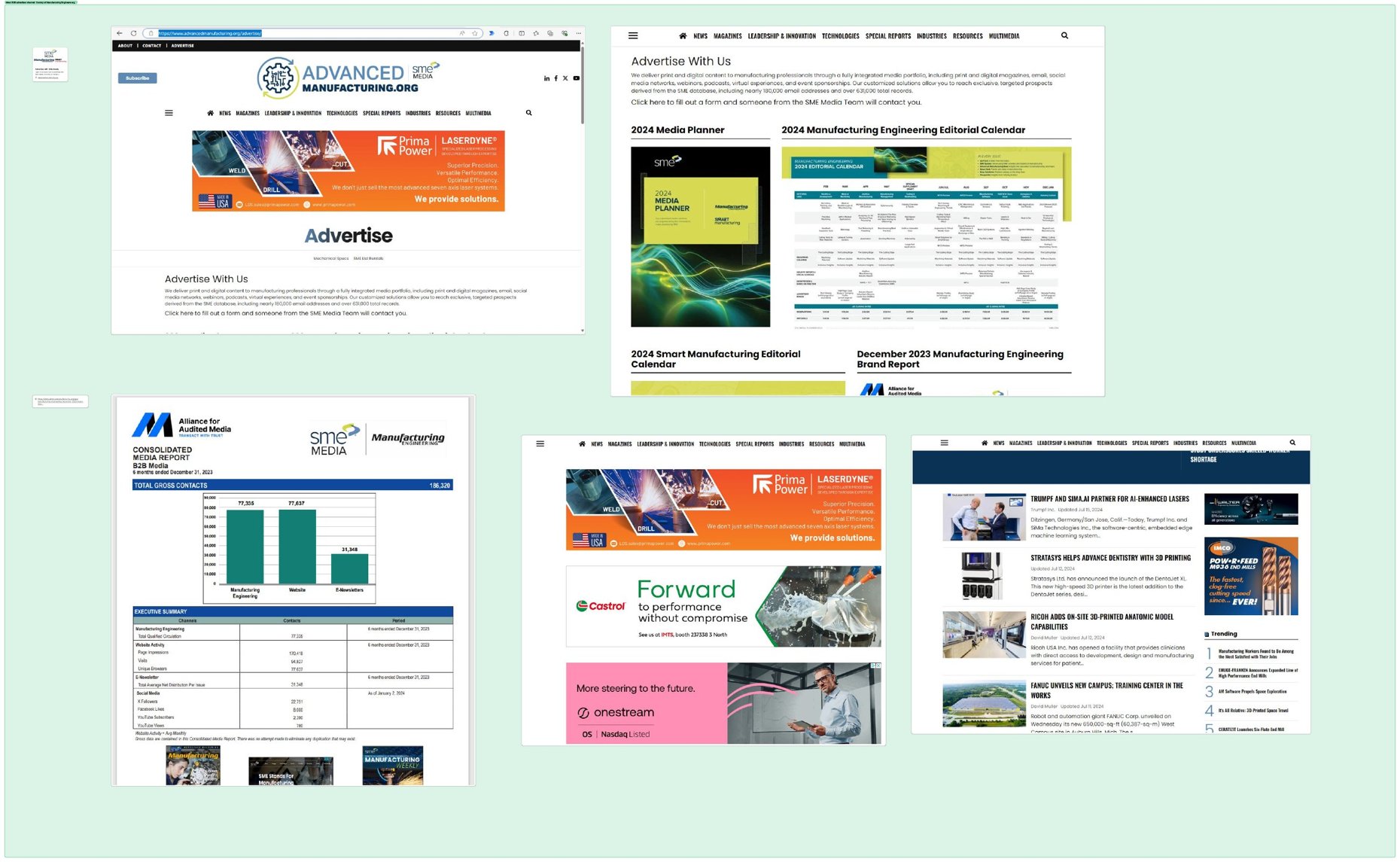
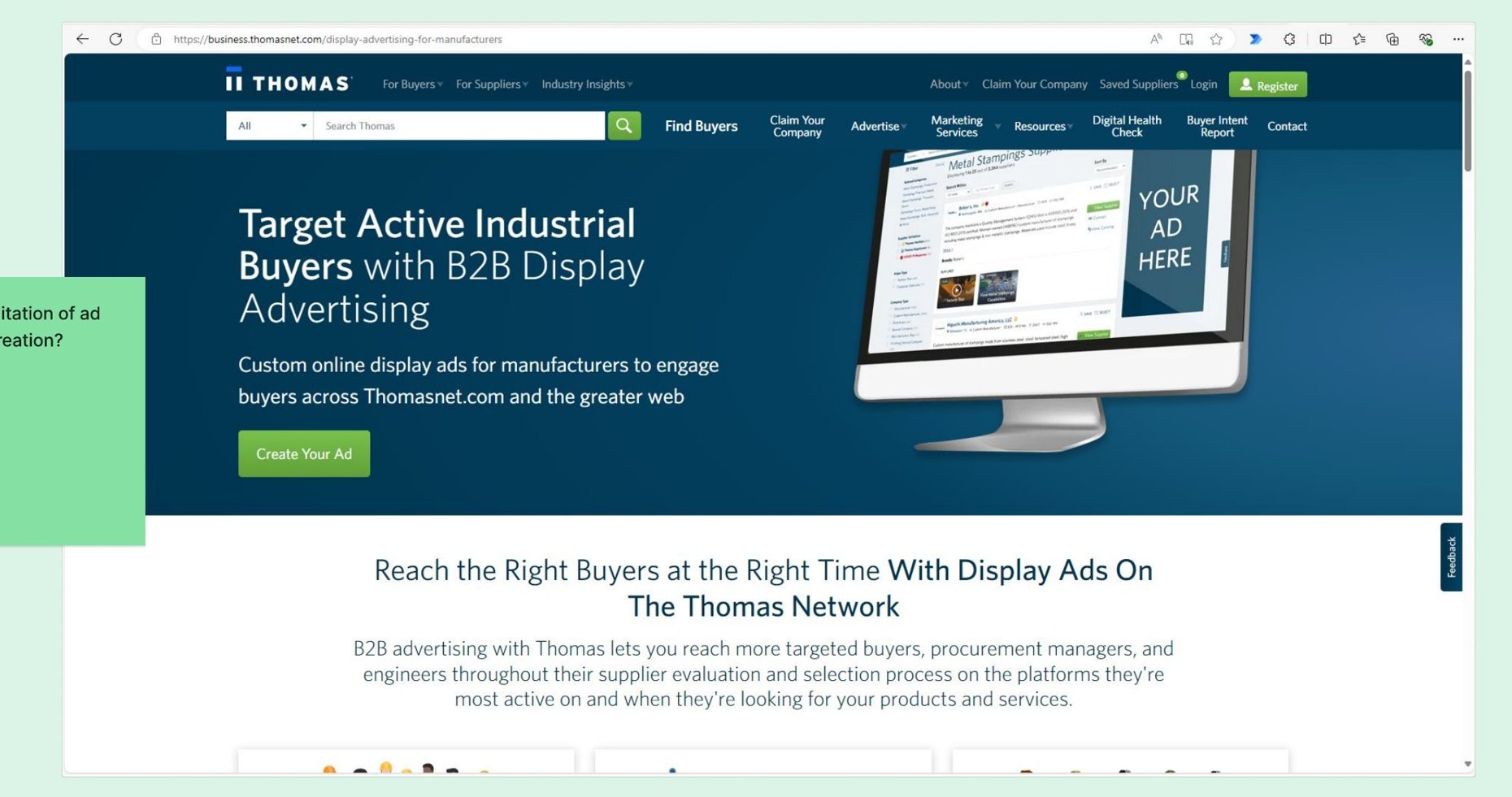
To see how direct B2B advertising is sold, I studied industry publishers that already do it. SME Media has a media kit, an editorial calendar and an audited reach report. Thomasnet sells display ads to manufacturers.
Thomasnet raised a question that I carried into the design, namely whether Cubeler should help advertisers create their campaigns or leave it to self-serve.
Personas
3 kinds of advertiser came out of the research, each with a different person making the decision. I built the personas from job descriptions, job postings and agency websites, so their goals and frustrations come from how these roles are actually described.
- Grant, business development manager at a marketing agency or enterprise. "Looking for the next big thing." He finds new channels and partners, and negotiates the contract.
- Kelsey, digital marketing manager at a larger company. "Show me the data." She plans and runs the campaigns, and has to prove ROI.
- Helen, marketing manager at an SME. "Where's my hat?!" She runs a two-person team, does everything herself and has no time to spare.
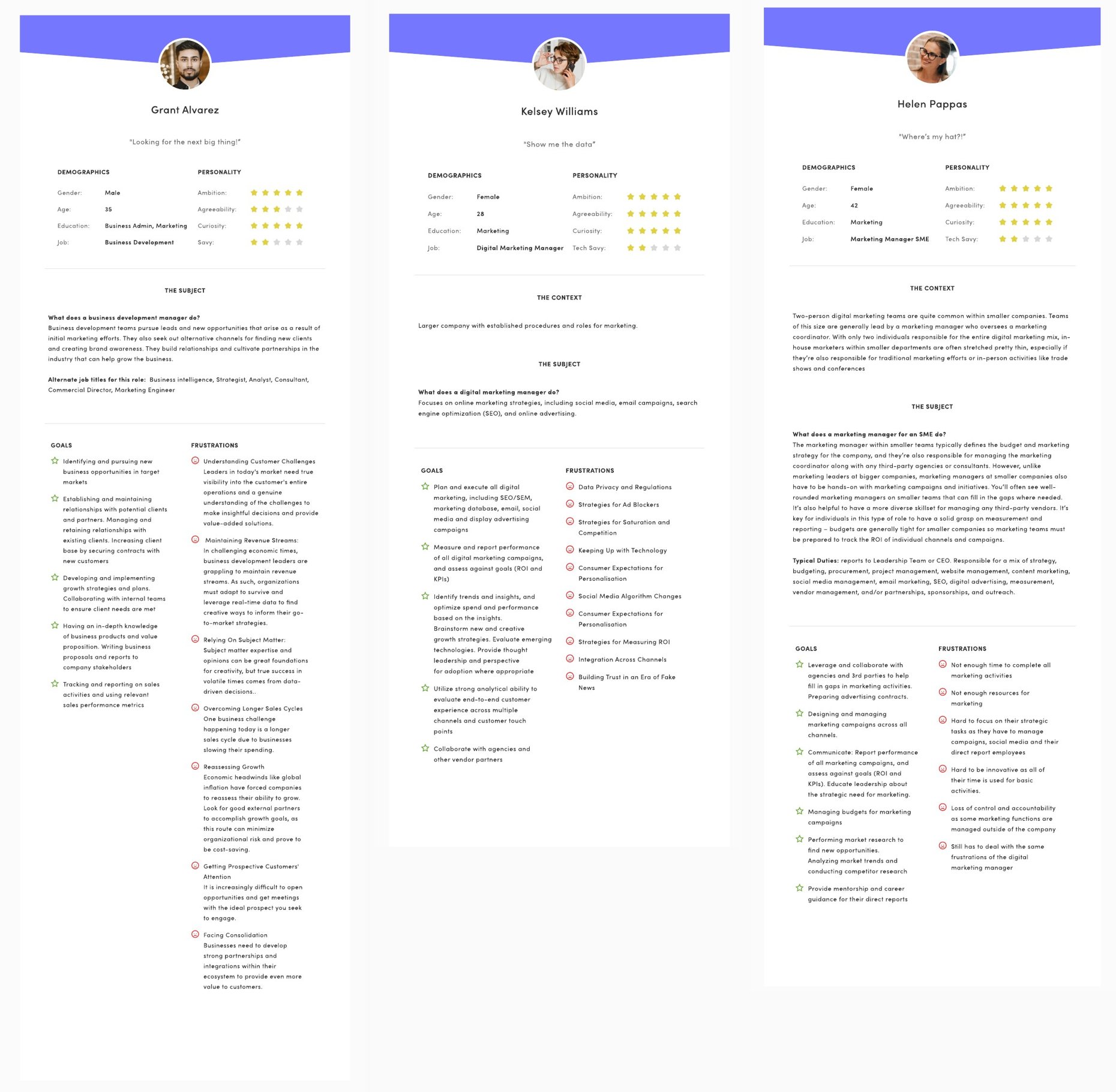
All 3 share the same business pains:
- Privacy rules have made audience targeting harder
- Typical ad platforms cater to consumers, so a business audience is hard to reach
- It is hard to prove to stakeholders that marketing spend leads to business outcomes
Their goals follow from these pains:
- Find new strategic partners
- Show with hard data that campaigns reach the right audience
- Get leads to the sales team
Rose, Bud, Thorn
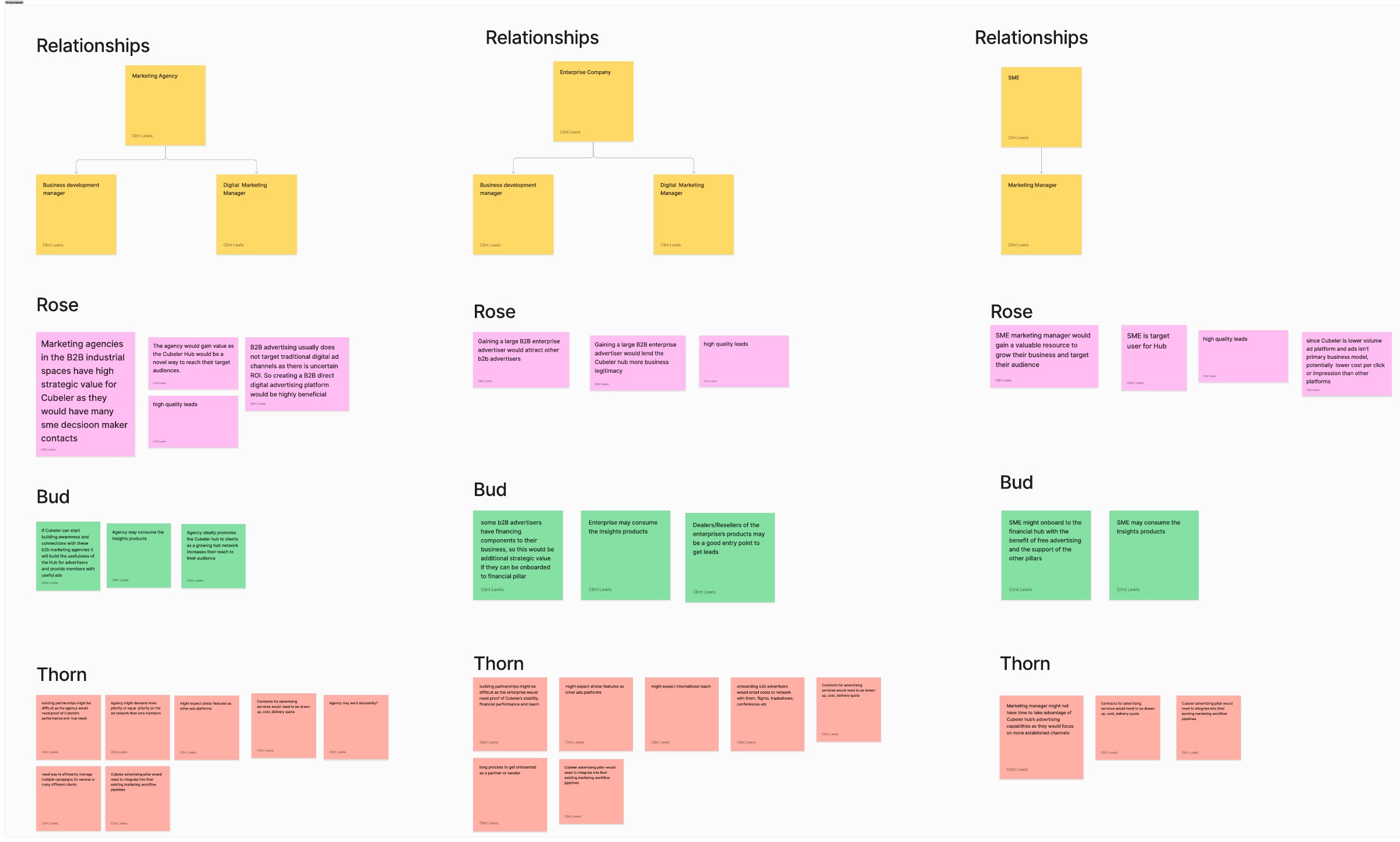
For each advertiser type I mapped who is involved. I then noted what is working (rose), what has potential (bud) and what will get in the way (thorn). Here are a few examples:
Rose
B2B agencies hold many SME decision-maker contacts. One large enterprise advertiser would attract others and lend the hub legitimacy. For an SME, lower volume could mean a lower cost per click.
Bud
Advertisers with financing arms could also join as lenders. Agencies and enterprises may use the Insights products. Dealers and resellers may be a good entry point.
Thorn
Partners will want proof of performance and reach. They will expect the features of other ad platforms, and contracts with costs and delivery quotas. An SME marketer may not have time to learn another tool.
Customer Journeys
As a last step I drew a service blueprint for each advertiser. It shows what the customer does, what Cubeler's people and screens do in front of them, what happens backstage, and the systems that support it.
The journey runs from a first meeting at a tradeshow or a LinkedIn message, through the pitch and the decision to partner, to a contract or a self-serve setup. It continues with scheduling, monitoring delivery, reporting, and sending leads to the sales team.
I left my open questions on the board where the team could see them:
- Is the contract negotiated by a different persona?
- How is the budget set in the self-serve case?
- Do we need a sales persona?
These questions became product decisions.
Outcome
The research carried directly into the module that shipped:
- Direct, not programmatic. Fixed pricing per 1,000 impressions and campaigns reviewed by people, with no bidding or exchange.
- Designed for Helen first. A one-page campaign builder that a busy SME marketer can finish without training.
- Leads over impressions. Every persona needed to prove ROI and feed sales, so the module centres on leads and cost per lead.
- Backstage steps became features. Admin approval, campaign monitoring, downloadable reports, cloning a campaign, and extending one that under-delivers without a new review.
See the result in the Cubeler Advertising case study.